
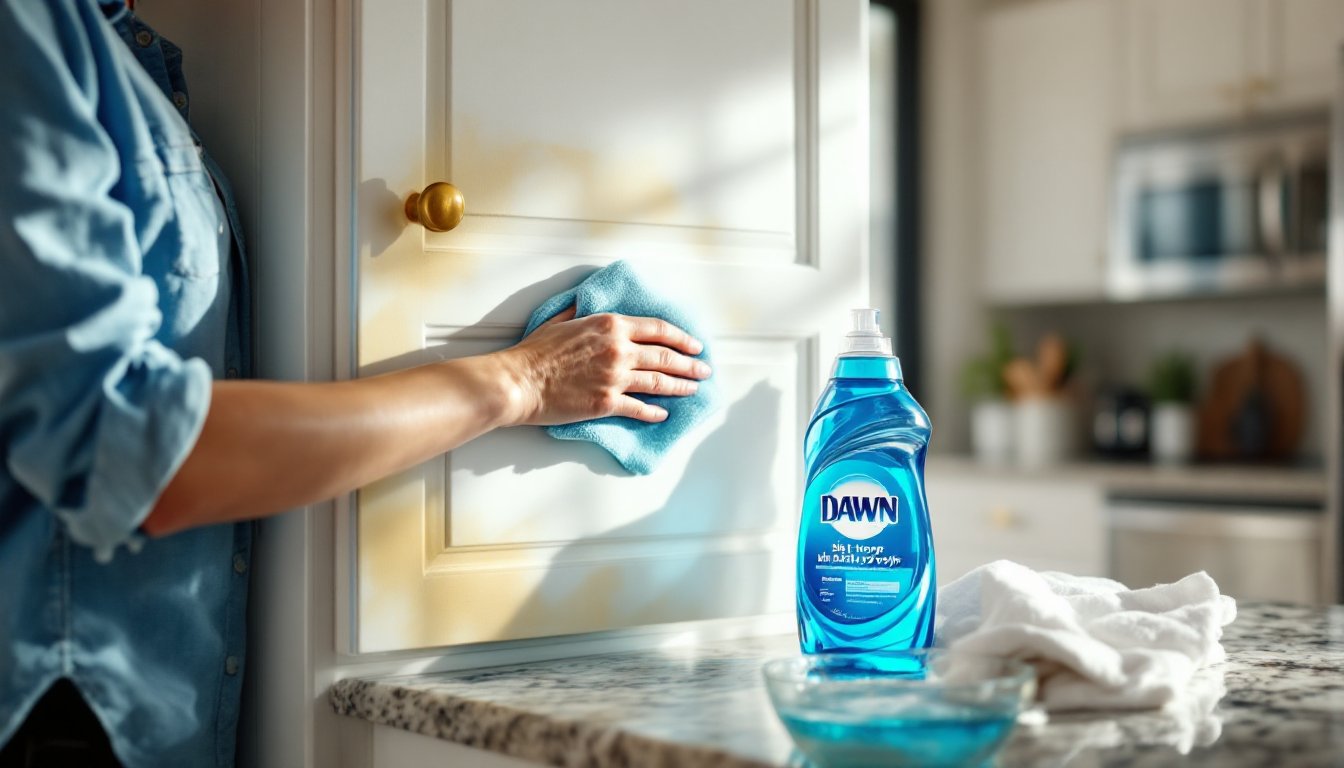
Kitchen cabinets take a beating. Every time someone cooks bacon, sautés onions, or boils pasta, a fine mist of grease settles on cabinet surfaces. Over months, that invisible layer turns sticky, traps dust, and dulls the finish. Most all-purpose cleaners either smear the grease around or require harsh chemicals that can damage cabinet finishes. But there’s a simpler solution sitting next to the sink: Dawn dish soap. The same surfactants that cut through baked-on lasagna work remarkably well on cabinet grime, without the risk of stripping paint or damaging wood.
Table of Contents
ToggleKey Takeaways
- Cleaning kitchen cabinets with Dawn dish soap is effective because its surfactants break down grease and oils without damaging painted, laminated, or sealed wood finishes.
- Always use Dawn Original (the blue formula) diluted at 1 tablespoon per 2 cups of warm water, then rinse and dry immediately to prevent streaks and residue buildup.
- For stubborn grease spots, apply undiluted Dawn directly to the problem area, let it sit for 1-2 minutes, then gently work it in with a microfiber cloth or soft-bristle brush.
- Clean kitchen cabinet fronts monthly if you cook daily, quarterly for moderate cooking, and biannually if cooking is infrequent, adjusting frequency based on ventilation and stove proximity.
- Use microfiber cloths instead of sponges or paper towels, rotate them frequently, and follow a three-step process—wash, rinse, dry—to achieve a truly clean, streak-free finish.
Why Dawn Dish Soap Is Perfect for Cleaning Kitchen Cabinets
Dawn’s formulation is designed to break down oils and fats, which is exactly what kitchen grease is. Unlike multi-surface cleaners that rely on solvents or abrasives, Dawn uses surfactants, molecules that latch onto grease on one end and water on the other, allowing油 to rinse away cleanly.
This matters for cabinets because most finishes, whether painted, laminate, or sealed wood, are sensitive to harsh chemicals. Ammonia-based cleaners can yellow white paint. Citrus degreasers can dull polyurethane. Dawn, diluted properly, is gentle enough for daily use but strong enough to dissolve months of buildup.
Another advantage: Dawn rinses clean. Many kitchen cleaners leave a residue that actually attracts more dust and grease. With Dawn, if it’s rinsed thoroughly, the surface is left truly clean, not just visibly cleaner.
One word of caution: Always use Dawn Original (the blue formula). Scented or antibacterial versions sometimes contain additives that can leave streaks or residue on glossy finishes. Stick with the classic.
What You’ll Need to Clean Your Cabinets with Dawn
Gather these supplies before starting. Having everything at hand keeps the process moving and prevents cleaner from drying on surfaces.
Materials:
- Dawn Original dish soap (blue formula)
- Warm water (not hot, heat can damage some finishes)
- Two buckets or large bowls
- Microfiber cloths (at least 4-6: they hold solution better than sponges and won’t scratch)
- Soft-bristle toothbrush or detailing brush (for crevices and molding)
- Clean, dry towels for buffing
Optional but helpful:
- Step stool or small ladder (for upper cabinets)
- Drop cloths or old towels (to protect countertops and floors from drips)
- Spray bottle (for spot-treating stubborn areas)
Most homeowners already have everything on this list. If not, microfiber cloths are worth buying, they’re reusable, lint-free, and far more effective than paper towels or sponges for this task.
Step-by-Step Guide to Cleaning Kitchen Cabinets with Dawn
Preparing Your Cabinets for Cleaning
Start by clearing cabinet fronts of magnets, decor, or anything stuck to the surface. Open all doors to access both sides. If hardware (handles, knobs) is heavily caked with grease, consider removing it for separate cleaning, most pulls unscrew from the inside with a Phillips-head screwdriver.
Dust first. Use a dry microfiber cloth to wipe down all surfaces, removing loose crumbs, dust, and cobwebs. This step prevents turning dry dust into muddy streaks when cleaner is applied. Pay extra attention to the tops of upper cabinets, where grease and dust form a sticky film that’s easy to miss.
Protect countertops and floors. Lay down towels or drop cloths below the work area. Drips happen, especially when cleaning upper cabinets overhead.
Test the finish. Before cleaning all cabinets, test the Dawn solution on an inconspicuous spot, inside a door or on a lower corner. Wait five minutes and check for discoloration, dulling, or finish damage. This is especially important for older cabinets with unknown finishes or hand-painted surfaces.
Applying Dawn Solution and Removing Grease
Mix the cleaning solution: In the first bucket, combine 1 tablespoon of Dawn Original with 2 cups of warm water. That ratio is strong enough for typical grease but won’t leave residue. For cabinets that haven’t been cleaned in over a year, increase to 1.5 tablespoons per 2 cups.
Fill the second bucket with plain warm water for rinsing. Having a dedicated rinse bucket is critical, it ensures you’re not just redistributing grease.
Dip a microfiber cloth into the Dawn solution, wring it out thoroughly (it should be damp, not dripping), and wipe cabinet surfaces in a top-to-bottom motion. Work in sections roughly 2-3 feet square. This keeps the cleaner from drying before you rinse.
For flat cabinet fronts, use long, even strokes. For raised-panel or Shaker-style doors, wipe along the grain of the wood or the direction of the panel. Avoid circular scrubbing, it can leave swirl marks on glossy finishes.
After wiping a section with Dawn solution, immediately follow with a clean, damp cloth dipped in the rinse bucket. Wring it well and wipe the same area to remove soap residue. Then buff dry with a clean towel. This three-step process, wash, rinse, dry, is what prevents streaks and buildup.
Rotate cloths frequently. Once a cloth is saturated with grease, it stops cleaning effectively. Keep a stack of fresh microfiber cloths nearby and swap them out as needed. For a full kitchen, expect to use 4-6 cloths depending on the level of grime and cabinet size.
Tackling Stubborn Grease and Sticky Buildup
Some areas, directly above the stove, around handles, along the top edges of doors, accumulate grease that won’t come off with a single pass. Don’t scrub harder with the same diluted solution. Instead, apply undiluted Dawn directly to the problem area.
Put a small dab of Dawn Original on a damp microfiber cloth or soft-bristle toothbrush. Gently work it into the sticky spot using small circular motions. Let it sit for 1-2 minutes to break down the grease. Then wipe clean with a damp cloth and rinse thoroughly.
For textured surfaces, carved details, or grooves in cabinet molding, a detailing brush or old toothbrush works better than a cloth. Dip the brush in the Dawn solution, scrub gently along the crevice, then wipe away loosened grime with a damp cloth. Many homeowners find that home organization strategies for cleaning tools make this easier.
If grease has turned into a hardened, varnish-like layer (common on cabinets near fryers or above gas ranges), you may need to repeat the process 2-3 times. Apply Dawn, let it dwell, wipe, rinse, and repeat. Patience works better than force.
Avoid these mistakes:
- Don’t use abrasive pads (Scotch-Brite, steel wool) on finished cabinets. They’ll scratch the surface and dull the sheen.
- Don’t use excessive water. Too much moisture can seep into seams, causing wood to swell or laminate to peel.
- Don’t let Dawn sit on the surface for more than a few minutes. Prolonged contact with soap can sometimes dull certain finishes.
After handling stubborn spots, many find that applying consistent cleaning techniques keeps future buildup from becoming a major project.
How Often Should You Clean Kitchen Cabinets with Dawn?
Frequency depends on cooking habits, ventilation, and cabinet location. Cabinets directly adjacent to the range need more attention than those across the room.
General guidelines:
- Monthly: Wipe down all cabinet fronts with the Dawn solution if you cook daily, especially if frying, sautéing, or using high heat.
- Quarterly: For moderate cooks (3-4 meals per week at home), a deep clean every three months prevents heavy buildup.
- Biannually: If cooking is infrequent or the kitchen has excellent ventilation (e.g., a range hood vented to the outside), twice a year may suffice.
Cabinets above the stove and refrigerator often need spot-cleaning between full washes. A quick wipe with a Dawn-dampened cloth every few weeks keeps grease from hardening into a layer that requires serious elbow grease.
Kitchens with poor ventilation, no range hood, or a recirculating fan that doesn’t vent outdoors, accumulate grease faster. In those cases, increase cleaning frequency or the grease will bond to the finish and become much harder to remove. Improving ventilation, even by opening a window while cooking, dramatically reduces how often cabinets need deep cleaning.
Proper ventilation and consistent cleaning routines overlap with broader home cleaning strategies, where regular light maintenance beats periodic deep scrubbing. The same principle applies here, regular Dawn wipe-downs take 15 minutes and prevent the need for hour-long grease battles.
One final note: After cleaning, some homeowners apply a thin layer of furniture polish or cabinet conditioner (appropriate for the finish type) to add a protective barrier. This isn’t required, but it can make the next cleaning session easier by preventing grease from bonding directly to the finish. Test any product on a hidden area first. Resources like The Spruce often provide finish-specific care guides if unsure.
For glass-front cabinets or windows near the kitchen, the same gentle approach applies, light, consistent cleaning with safe products yields the best results. Some DIYers prefer DIY window cleaning methods using common household items like vinegar, but for greasy cabinet glass, Dawn remains the top choice due to its grease-cutting power.
Cabinets are one of the most visible elements in a kitchen. Keeping them clean doesn’t require specialty products or professional help, just Dawn, warm water, and a bit of consistency. When grease is caught early and addressed with the right technique, even heavily used kitchens can maintain that just-installed look for years. According to Good Housekeeping’s cabinet cleaning guide, Dawn is consistently recommended by cleaning professionals for this exact reason.


