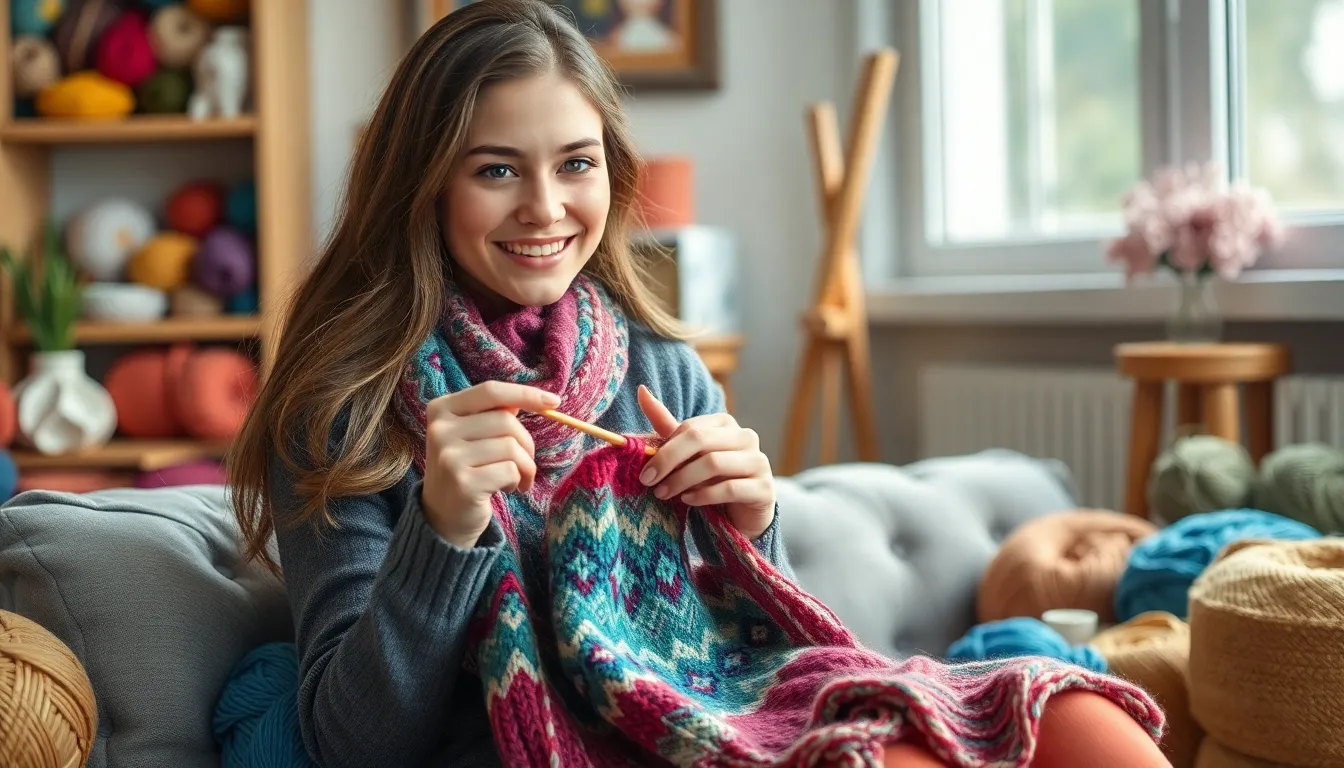
Knitting is more than just a craft; it’s a delightful blend of creativity and relaxation. For those just starting out, the world of knitting can seem overwhelming with its myriad of stitches, yarn types, and tools. However, it’s also an incredibly rewarding hobby that offers the chance to create beautiful, handmade items while unwinding from the hustle and bustle of daily life.
This guide is designed specifically for beginners eager to embark on their knitting journey. With simple tips and essential techniques, anyone can pick up needles and yarn and start crafting in no time. Whether it’s a cozy scarf or a warm blanket, knitting opens up a world of possibilities that can bring joy and satisfaction to both the maker and those who receive their creations.
Table of Contents
ToggleWhat Is Knitting?
Knitting is a method of creating fabric by interlocking loops of yarn using two needles. This craft results in a wide variety of items, from clothing to home décor. Beginners often encounter terms such as stitches, patterns, and yarn types, which form the foundation of knitting.
Knitting starts with simple techniques, allowing newcomers to create basic items quickly. The most common stitches include knit and purl, which serve as the building blocks for more complex patterns. Knitting projects typically progress from simple scarves to intricate sweaters.
The process encourages creativity and self-expression. Individuals can choose colors, textures, and patterns to personalize their creations. Knitting not only provides a sense of accomplishment but also promotes relaxation and mindfulness.
For beginners, understanding essential tools is vital. Basic supplies include:
- Yarn: Available in various fibers like wool, cotton, or acrylic. Each type offers different qualities suited for diverse projects.
- Needles: Vary in size and material, such as bamboo, plastic, or metal. Needle size affects the gauge and drape of the finished piece.
- Patterns: Guide the creation process, providing instructions on the required stitches and assembly. Beginners often start with free resources available online or beginner-friendly books.
Knitting creates an opportunity to engage in a productive, fulfilling hobby. With practice, beginners can soon enjoy the satisfaction of crafting unique handmade items.
Essential Tools for Knitting
Knitting requires a few essential tools to help beginners start their journey successfully. Understanding these tools can significantly enhance the knitting experience.
Yarn Types
Yarn comes in various types, each suitable for different projects:
- Acrylic yarn: Affordable, durable, and easy to care for, making it ideal for beginners. It comes in many colors and is often used for practice projects.
- Wool yarn: Natural fiber known for warmth and elasticity. It’s great for clothing items but may require special washing techniques.
- Cotton yarn: Lightweight and breathable, perfect for summer garments and dishcloths. It offers good stitch definition but lacks elasticity.
- Blends: Combinations of different materials, such as wool and acrylic, provide unique characteristics. They often balance texture and durability.
Choosing the right yarn type based on project needs enhances the finished item and makes the process enjoyable.
Needles and Accessories
Selecting the correct needles and accessories is crucial for a smoother knitting experience:
- Needle types: Straight needles are ideal for flat pieces, while circular needles allow for knitting in the round. Double-pointed needles work well for small circumferences like socks.
- Needle sizes: They vary from 0 (tiny) to 50 (large), with sizes affecting stitch size and project tension. Beginners should start with mid-range sizes like US 8 or US 9 for worsted weight yarn.
- Stitch markers: Useful for keeping track of pattern repeats or identifying the beginning of a round, especially in more complex projects.
- Tapestry needles: Essential for weaving in yarn ends and seaming pieces together, they come with a large eye and a blunt tip.
- Measuring tape: Basic for checking gauge and ensuring the right fit for garments.
Equipping with suitable needles and accessories ensures a more enjoyable and effective knitting process.
Basic Knitting Techniques
Basic knitting techniques form the foundation of creating fabric through yarn. Mastering these skills allows beginners to produce a variety of projects effectively.
Casting On
Casting on refers to the technique used to start a knitting project by creating the first row of loops on the needle. The simplest method is the long tail cast-on, which involves two strands of yarn. The first strand acts as the working yarn while the second serves as the tail. To execute this, follow these steps:
- Make a slipknot and place it on the needle.
- Hold both yarn strands, with the tail under your thumb and the working yarn over your index finger.
- Insert the needle under the thumb yarn, over the index yarn, then back through the loop on your thumb.
- Pull tighter to create a secure stitch.
- Repeat the process until reaching the desired number of stitches.
This method produces an even foundation for various knitting patterns and ensures the first row remains secure.
Knit and Purl Stitches
The knit and purl stitches are fundamental for building fabric in any knitting project.
- Knit Stitch: To create a knit stitch, insert the right needle from front to back into the first stitch on the left needle. Wrap the working yarn around the right needle and pull it through the stitch, dropping the old stitch off the left needle. This stitch produces a smooth texture on the front of the fabric.
- Purl Stitch: To execute a purl stitch, hold the working yarn in front of the project. Insert the right needle from back to front into the first stitch on the left needle, wrap the yarn around the right needle, and pull it through. Drop the old stitch off the left needle. This stitch forms a bumpy texture on the front.
These stitches can be combined in various sequences to create various textures, patterns, and designs, laying the groundwork for more complex knitting techniques.
Simple Knitting Projects
Beginners can explore various simple knitting projects that offer both satisfaction and skill-building. These projects allow them to practice fundamental techniques while creating functional and fun items.
Scarves and Dishcloths
Scarves and dishcloths serve as excellent starting points for beginners.
- Scarves: Straightforward rectangles perfect for practicing knit and purl stitches. One can start with a simple pattern using worsted-weight yarn and size 8 straight needles. A basic garter stitch or ribbing pattern creates texture while ensuring the project remains manageable.
- Dishcloths: Small squares ideal for honing skills without the commitment of larger items. Cotton yarn works well for dishcloths, as it’s absorbent and durable. A simple garter stitch pattern allows for easy learning and quick completion, making it satisfying for new knitters.
Hats and Blankets
Hats and blankets provide opportunities for applying knitting skills in slightly more complex projects.
- Hats: Knitted in the round, hats introduce techniques like increasing and decreasing stitches. Suitable yarn choices include acrylic or wool blends for warmth and comfort. Beginners can start with a simple beanie pattern and experiment with ribbing for the brim.
- Blankets: Larger projects like blankets allow for creativity and practice of various stitch patterns. Beginners can create a cozy lap blanket using bulky yarn and size 10 circular needles. A simple stitch pattern, such as seed stitch or garter stitch, keeps the project easy while enabling exploration of color changes and texture.
These projects not only bolster knitting skills but also lead to practical items that enhance daily life.
Tips for Successful Knitting
Understanding common mistakes and maintaining supplies enhances the knitting experience for beginners. Incorporating these practices simplifies the craft and promotes enjoyment.
Common Mistakes to Avoid
- Neglecting to read patterns: Beginners often overlook pattern instructions, leading to errors in projects.
- Inconsistent tension: Variations in tension create uneven stitches, impacting the overall appearance of the item.
- Forgetting to count stitches: Losing track of stitches can result in unexpected increases or decreases, affecting the shape of the project.
- Skipping gauge swatches: Ignoring gauge swatches may lead to ill-fitting items, especially in garments.
- Not practicing finishing techniques: Beginners often neglect finishing techniques like weaving in ends, which affects the polished look of the final product.
- Choosing improper yarn for projects: Selecting yarn that doesn’t match the pattern requirements can yield unsatisfactory results.
Maintaining Your Knitting Supplies
- Organizing tools: Keeping needles, stitch markers, and measuring tapes in a designated container improves accessibility and reduces frustration during projects.
- Storing yarn properly: Storing yarn in a dry, cool place protects against damage and prevents tangling.
- Cleaning tools regularly: Regular cleaning of needles and tools prevents residue build-up and allows for smooth knitting.
- Checking for wear and tear: Inspecting supplies for damage, such as frayed needles, ensures optimal performance during crafting.
- Labeling unused yarn: Labeling leftover yarn helps with future projects and eliminates confusion about fiber content.
- Maintaining an inventory: Keeping a checklist of available supplies supports efficient planning for upcoming projects and reduces unnecessary purchases.
Knitting opens the door to a world of creativity and relaxation for beginners. With practice and the right tools anyone can transform simple yarn into beautiful handmade pieces. The journey begins with mastering basic techniques and choosing the right materials.
As they progress beginners will find joy in creating unique items that reflect their personal style. Each completed project not only enhances their skills but also brings a sense of accomplishment. Embracing this craft can lead to a fulfilling hobby that enriches both the mind and soul.
With patience and perseverance knitting becomes more than just a pastime; it evolves into a cherished part of daily life.