
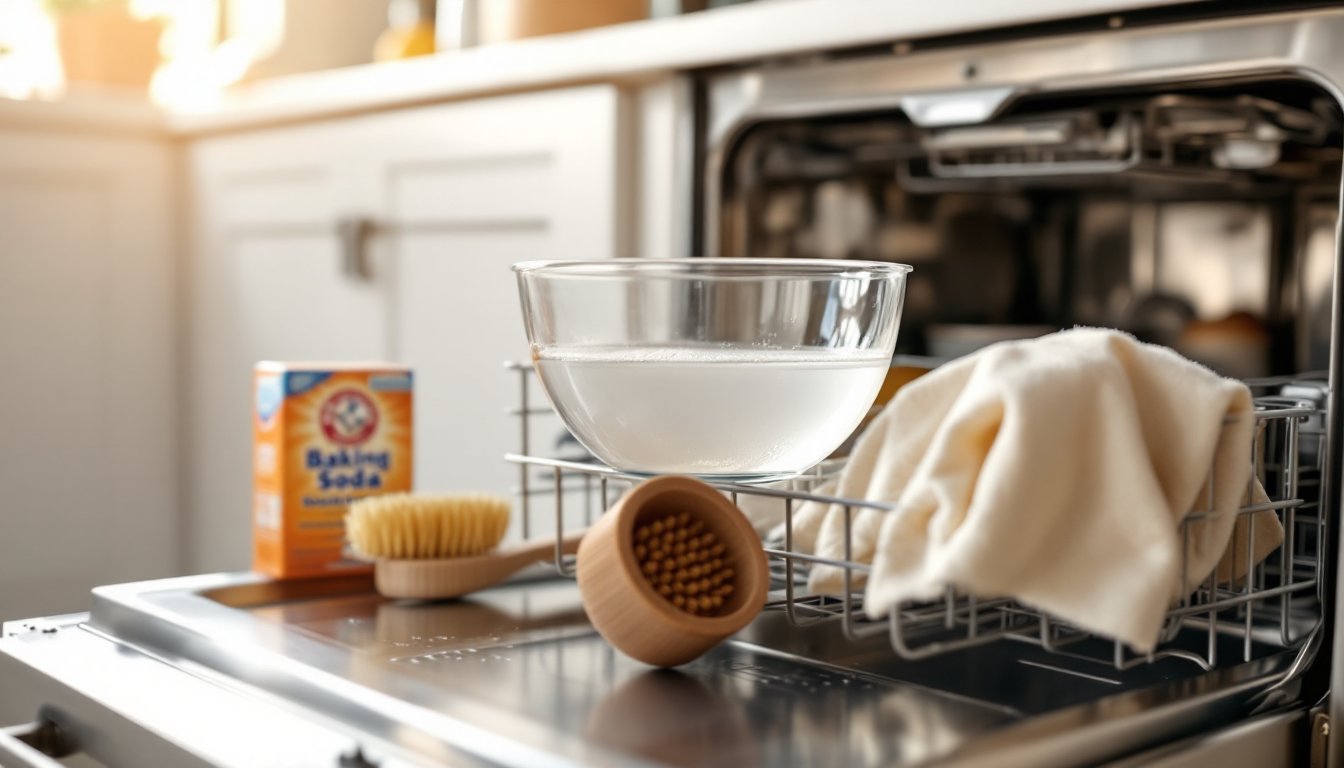
A dishwasher scrubs dishes clean every day, but what’s cleaning the dishwasher itself? Over time, food particles, mineral deposits, soap scum, and grease accumulate inside, clogging spray arms, gunking up filters, and leaving behind unpleasant odors. Left unchecked, these buildups reduce cleaning efficiency and can shorten the appliance’s lifespan. The good news: white vinegar and baking soda, two pantry staples, can tackle most of this grime without harsh chemicals or professional help. This guide walks through a straightforward, two-step cleaning process that restores performance and freshness in about an hour of hands-on time.
Table of Contents
ToggleKey Takeaways
- Cleaning a dishwasher with vinegar and baking soda eliminates mineral deposits, soap scum, and grease without harsh chemicals in just one hour.
- White vinegar dissolves buildup on interior surfaces and spray arms, while baking soda deodorizes and removes stains through a simple two-cycle process.
- Deep cleaning the filter, spray arms, and door gasket by hand ensures maximum efficiency and prevents mold, mildew, and unpleasant odors.
- Monthly vinegar cycles and weekly filter inspections maintain peak performance and extend your dishwasher’s lifespan.
- Proper loading habits, including scraping plates and leaving the door ajar after each cycle, reduce debris buildup and prevent the need for frequent deep cleaning.
Why Your Dishwasher Needs Regular Cleaning
Dishwashers handle dirty dishes, but they aren’t self-cleaning. Each load leaves behind traces: food particles trapped in the filter, grease coating the interior walls, and hard water minerals clinging to spray arm nozzles. Calcium and lime deposits from hard water are especially stubborn, they clog jets, reduce water pressure, and leave cloudy spots on glassware.
Soap scum and detergent residue also build up over time, even with rinse-aid products. This film traps bacteria and creates a damp environment where mold and mildew thrive, producing that musty smell when the door opens.
Performance suffers too. A clogged spray arm can’t distribute water evenly, leaving dishes dirty. A blocked filter forces the pump to work harder, shortening its lifespan. Cleaning every one to three months, depending on use and water hardness, prevents these issues and keeps the machine running efficiently.
Safety note: Before any dishwasher maintenance, ensure the appliance is off and cool. Wear rubber gloves to protect hands from grime and residue.
What You’ll Need: Supplies and Preparation
This cleaning method uses basic household items, no specialty cleaners required. Gather the following before starting:
Supplies:
- 2 cups white distilled vinegar (5% acidity)
- 1 cup baking soda
- Dishwasher-safe bowl or measuring cup (ceramic or glass, at least 2-cup capacity)
- Soft-bristle brush (an old toothbrush works well for tight spots)
- Microfiber cloth or sponge
- Rubber gloves
- Optional: Small wire brush or toothpick for spray arm nozzles
Preparation steps:
- Empty the dishwasher completely. Remove all dishes, utensils, and racks if possible (makes access easier).
- Check the drain area. Pull out the lower rack and inspect the drain at the bottom. Remove any visible food debris, broken glass, or utensil bits by hand or with a damp cloth.
- Remove and inspect the filter. Most dishwashers have a cylindrical filter assembly at the base. Twist counterclockwise and lift out (consult the owner’s manual if unsure). Rinse under warm water to clear loose debris.
Prep work matters here, skipping the drain and filter check means running vinegar over existing clogs, which won’t dissolve large particles.
Step-by-Step: Cleaning with Vinegar
White vinegar is mildly acidic, making it effective against mineral deposits, soap scum, and grease without damaging seals or gaskets. This step tackles buildup on interior surfaces and the spray system.
Instructions:
- Place 2 cups of white vinegar in a dishwasher-safe bowl or large measuring cup. Use glass or ceramic, plastic may tip over during the cycle.
- Position the bowl on the top rack of the empty dishwasher, upright and centered.
- Run a full hot-water cycle. Select the hottest setting available (often labeled “Heavy” or “Sanitize”). Skip the heated dry option, air-dry is fine.
- Let the cycle complete. The vinegar will vaporize and circulate, dissolving mineral deposits on walls, heating elements, and spray arms. You’ll notice a slight vinegar smell during and immediately after the cycle.
- Open the door once finished and let the interior air out for 10-15 minutes.
Why hot water matters: Vinegar’s effectiveness increases with temperature. Hot water (140–160°F) helps break down grease and activate the acid’s dissolving action. If the water heater is set below 120°F, the cycle may not reach optimal cleaning temperature, consider adjusting the heater or running the kitchen tap until hot before starting the dishwasher.
Avoid mixing vinegar with bleach or commercial dishwasher cleaners during this cycle. The combination can produce harmful fumes or reduce effectiveness.
Step-by-Step: Cleaning with Baking Soda
After the vinegar cycle, baking soda (sodium bicarbonate) provides a gentle abrasive scrub and neutralizes lingering odors. It also brightens stainless steel interiors and removes surface stains.
Instructions:
- Sprinkle 1 cup of baking soda evenly across the bottom of the empty dishwasher. Focus on the tub floor, but some powder on the door and walls is fine.
- Run a short hot-water cycle. A quick wash or rinse cycle works, no need for a full heavy cycle. If the dishwasher has an “Express” or “Short Wash” setting (typically 30-60 minutes), use that.
- Let the cycle complete and air-dry. Open the door slightly to release steam and allow full air circulation.
What baking soda does: Its mild alkalinity neutralizes acidic food residues and odors, while fine particles gently scour surfaces without scratching. This step is especially useful if the dishwasher has developed a musty or sour smell, common in machines that sit unused for days between loads.
Pro tip: For stubborn stains on the tub or door, make a paste with 3 parts baking soda to 1 part water. Apply with a soft-bristle brush, let sit for 10 minutes, then wipe clean before running the baking soda cycle. This same approach works for bathroom surfaces in kitchens and baths throughout the home.
Deep Cleaning the Filter, Spray Arms, and Door Gasket
The vinegar and baking soda cycles handle general buildup, but three components often need hands-on attention: the filter, spray arms, and door gasket.
Filter
The filter traps food particles before they recirculate onto clean dishes. A clogged filter is the most common cause of poor dishwasher performance.
- Remove the filter assembly (usually twists out from the tub floor).
- Disassemble parts if the filter has multiple pieces (many have a coarse outer screen and fine inner mesh).
- Soak in warm, soapy water for 10-15 minutes. Use a few drops of dish soap.
- Scrub with a soft-bristle brush. Pay attention to mesh openings, grease and debris pack into these. A toothbrush works well for tight corners.
- Rinse thoroughly under running water until all soap and loosened debris are gone.
- Reinstall by reversing the removal steps. Ensure it locks into place, a loose filter can rattle or allow debris to enter the pump.
Spray Arms
Spray arms distribute water through small jets. Hard water minerals and food particles clog these nozzles, reducing water pressure and cleaning coverage.
- Remove spray arms. Most pull straight down off a mounting hub: some have a center cap that unscrews. Check the owner’s manual if unclear.
- Inspect each nozzle. Hold the arm up to a light source, clogs are visible as dark spots.
- Clear blocked holes with a toothpick or thin wire. Avoid using metal objects that could scratch or enlarge nozzles.
- Rinse under running water while rotating the arm to flush debris.
- Reinstall by aligning the mounting hub and snapping or screwing back into place. Spin the arms by hand to confirm they rotate freely.
For heavily clogged spray arms, soak in a 50/50 vinegar-water solution for 30 minutes before clearing nozzles. The same techniques used for streak-free windows with natural cleaners apply to other kitchen cleaning tasks.
Door Gasket
The rubber door gasket (or seal) traps moisture and food particles in its folds, prime territory for mold and mildew.
- Wipe down with a damp microfiber cloth dipped in a 1:1 vinegar-water solution.
- Pull back folds and clean inside with a soft-bristle brush or folded cloth. Gunk accumulates in the grooves.
- Dry thoroughly with a clean towel to prevent mold regrowth.
Do not use bleach or abrasive cleaners on gaskets, they degrade rubber and can cause leaks. Experts at Good Housekeeping recommend gentle, non-toxic cleaners for gasket maintenance to preserve seal integrity.
Maintenance Tips to Keep Your Dishwasher Fresh
Regular maintenance extends the time between deep cleans and prevents buildup before it becomes a problem.
After each load:
- Scrape plates before loading. The dishwasher removes food residue, but large chunks belong in the trash or compost.
- Leave the door ajar for 15-30 minutes after a cycle. Air circulation dries the interior and discourages mold.
Weekly:
- Wipe down the door and controls with a damp cloth. Fingerprints and splashes accumulate on stainless steel exteriors.
Monthly:
- Inspect and rinse the filter. Even if it doesn’t look dirty, a quick rinse prevents buildup.
- Check spray arm nozzles for visible clogs. Clear as needed.
Every 1-3 months:
- Run a vinegar cycle as described above. Frequency depends on water hardness and dishwasher use. Homes with hard water (above 7 grains per gallon) should clean monthly.
Use the right detergent and rinse aid: Excess detergent creates more buildup, not cleaner dishes. Follow the manufacturer’s dosage recommendations, often just 1-2 tablespoons of powder or a single pod per load. Rinse aid helps water sheet off dishes, reducing mineral spots and interior film. Resources like The Kitchn and Real Simple offer additional appliance care guidance tailored to different water conditions.
Avoid washing non-dishwasher-safe items: Wooden utensils, cast iron, and certain plastics can shed particles or warp, contributing to debris buildup.
Conclusion
Cleaning a dishwasher with vinegar and baking soda is straightforward, inexpensive, and effective, no harsh chemicals or service calls required. A vinegar cycle dissolves mineral deposits and grease, while baking soda freshens and deodorizes. Hands-on attention to the filter, spray arms, and door gasket ensures thorough results. With monthly maintenance and smart loading habits, the dishwasher will run cleaner, quieter, and more efficiently for years. The same two-step approach works season after season, making it a reliable part of any home maintenance routine.


