
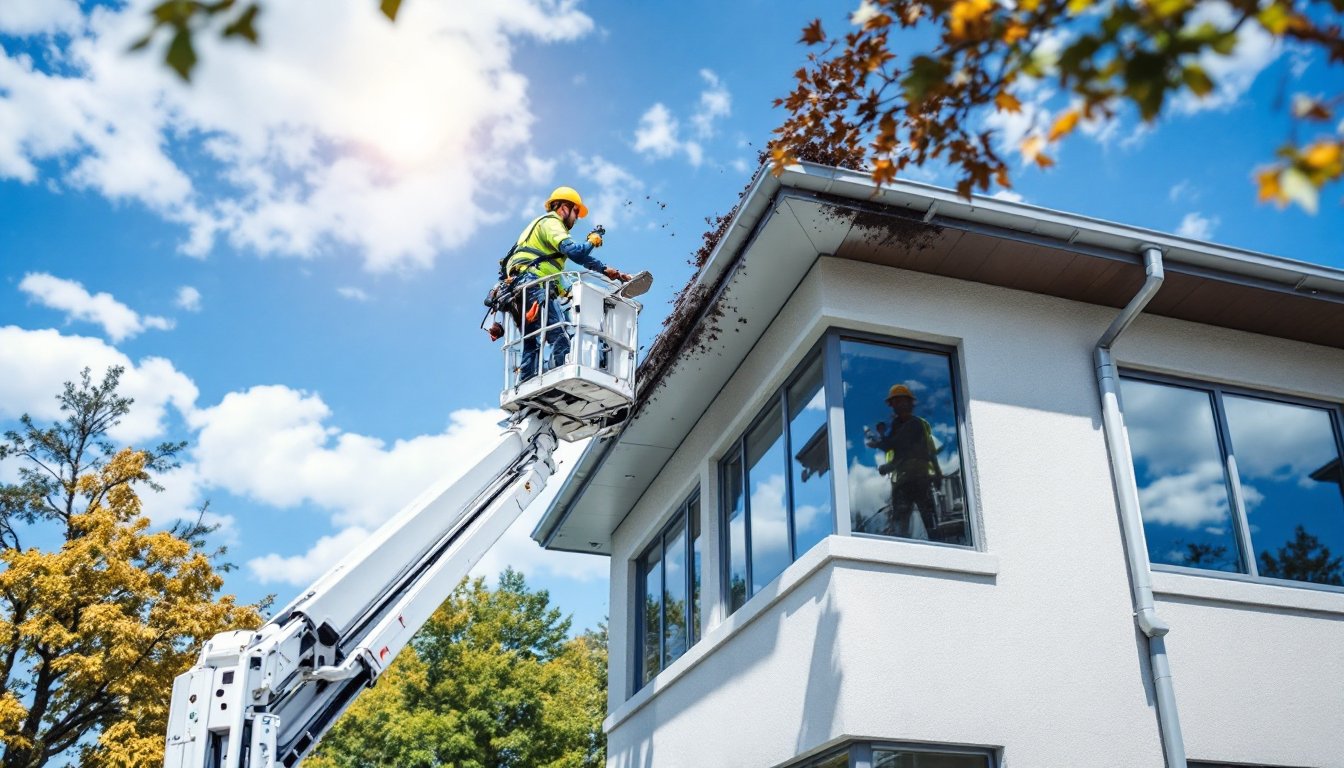
Commercial property managers and building owners face a critical maintenance decision every year: how much to budget for gutter cleaning. Unlike residential jobs, commercial gutter maintenance involves unique variables like multi-story access, larger volumes of debris, and liability concerns. Neglecting gutters can lead to foundation damage, roof leaks, and landscaping erosion, repairs that cost exponentially more than preventive cleaning. This guide breaks down the pricing factors, current market rates, and strategies to get reliable service without overpaying.
Table of Contents
ToggleKey Takeaways
- Commercial gutter cleaning prices range from $200–$400 for small single-story buildings to $500–$2,000+ for multi-story properties, with height and access being the primary cost drivers.
- Annual maintenance contracts reduce per-visit cleaning costs by 15–30% compared to one-off service calls, and buildings near deciduous trees typically require four cleanings yearly versus two in arid climates.
- Professional gutter cleaning services prove more cost-effective than DIY maintenance for buildings over two stories, as they include proper insurance, specialized equipment, and avoid OSHA compliance risks that could cost $50,000–$200,000 per injury.
- Getting multiple written quotes, scheduling during off-peak times (February or July), and bundling services with contractors can reduce commercial gutter cleaning expenses by 10–30%.
- First-time cleanings on neglected gutter systems cost significantly more than routine maintenance due to heavy debris buildup, while gutter guards ($8–$25 per linear foot) can pay for themselves in 3–5 years by reducing cleaning frequency.
What Influences Commercial Gutter Cleaning Costs?
Several factors determine what a property owner pays for commercial gutter cleaning. Understanding these variables helps when comparing quotes and negotiating contracts.
Accessibility plays a major role. Buildings with landscaping obstacles, parking lot proximity issues, or limited truck access require more labor. Some properties need lane closures or traffic management, adding coordination costs.
Gutter length matters more than square footage. A sprawling one-story warehouse may have more linear feet of gutter than a compact three-story office building. Contractors typically charge per linear foot or by the hour, so total gutter length drives base pricing.
Frequency affects per-visit costs. Quarterly maintenance contracts often cost less per cleaning than one-off service calls. Buildings near deciduous trees may need four annual cleanings, while properties in arid climates might only require two.
Downspout count and condition impact pricing. Clogged downspouts require snaking or disassembly. Buildings with underground drainage systems may need camera inspections to verify proper flow, an added expense not included in basic cleaning.
Building Size and Height
Height is the single biggest cost driver for commercial gutter work. Single-story buildings (up to 15 feet) allow workers to use standard extension ladders or simple scaffolding. Expect baseline rates in this category.
Two to three-story buildings (15–35 feet) require boom lifts, scaffolding, or specialized ladder systems. Equipment rental alone adds $200–$600 per day depending on the lift size and regional availability. According to contractor matching services, lift mobilization costs can double the total cleaning price for mid-rise properties.
Buildings over three stories necessitate professional rigging, aerial work platforms, or rope access technicians. Some contractors won’t bid on work above four stories without fall protection systems already installed on the building. Insurance requirements also escalate, expect higher liability costs passed through to the customer.
Building footprint matters too. A 10,000-square-foot retail center with simple rooflines costs less than a 10,000-square-foot office complex with multiple roof levels, valleys, and architectural details that complicate gutter runs.
Gutter Condition and Debris Level
First-time cleanings or neglected systems cost significantly more than routine maintenance. Heavy debris buildup, compacted leaves, roofing granules, or organic sludge, requires hand scooping, not just blowing or flushing. Labor time can triple compared to a well-maintained system.
Gutter damage discovered during cleaning often triggers additional charges. Sagging sections, separated seams, or rusted-through troughs need repair or replacement. Some contractors include minor resealing in their base price, but structural fixes are always extra.
Downspout blockages below the roofline require drain snakes or hydro-jetting. If a downspout connects to an underground drain tile system, clearing that line may involve digging or specialized equipment, work that crosses into landscaping or drainage contractor territory.
Pest infestations add complexity. Bird nests, wasp colonies, or rodent activity require removal and sanitization. Most gutter crews aren’t licensed pest control operators, so they’ll either charge a premium for the hazard or require property owners to hire exterminators first.
Properties with pine needles or seed pods face unique challenges. Pine straw weaves into gutter mesh and requires more aggressive cleaning techniques. Maple helicopters and oak tassels can matt together, forming dense blockages that standard flushing won’t clear.
Average Commercial Gutter Cleaning Prices in 2026
Commercial gutter cleaning pricing varies widely by region, building type, and service scope. These ranges reflect current market conditions but always get multiple written quotes for specific properties.
Per linear foot pricing typically runs $0.75–$2.50 per linear foot for routine cleaning on buildings under three stories. A 5,000-square-foot building with 400 linear feet of gutter would cost $300–$1,000 for basic service.
Hourly rates range from $75–$150 per technician hour in most markets. Two-person crews can clean 100–200 linear feet per hour on straightforward single-story jobs but may only handle 30–50 feet per hour on complex multi-story buildings.
Flat-rate packages for small commercial properties start around $200–$400 for buildings under 2,500 square feet with simple rooflines. Strip mall units and small offices often fall into this category.
Multi-story buildings (three stories and up) typically cost $500–$2,000+ per cleaning, depending on height and access. The cost estimation tools used by many contractors factor in equipment rental, crew size, and insurance surcharges for elevated work.
Annual maintenance contracts offer better per-visit pricing. A building requiring four cleanings per year might pay $1,200–$3,500 annually under contract versus $1,800–$5,000 for four separate service calls. Contracts also prioritize scheduling during peak seasons.
Additional services inflate base prices:
- Downspout cleaning and flushing: $10–$30 per downspout
- Minor gutter repairs: $50–$200 for resealing or bracket replacement
- Gutter guard installation: $8–$25 per linear foot (material and labor)
- Underground drain inspection: $150–$400 for camera work
Geographic pricing differences are significant. Urban markets with higher labor costs and strict permitting run 20–40% above rural areas. Coastal regions with year-round precipitation see steadier pricing, while seasonal markets in snow-belt states show price spikes in spring and fall.
DIY vs. Professional Commercial Gutter Cleaning: Cost Comparison
Property owners sometimes consider in-house gutter maintenance to cut costs. The decision depends on building complexity, staff capability, and liability tolerance.
DIY equipment costs include ladders or lifts, safety gear, cleaning tools, and disposal. A commercial-grade extension ladder (24–40 feet) runs $300–$800. Boom lift rental costs $200–$600 per day, plus delivery fees. Fall protection equipment, harnesses, anchor points, and lanyards, adds another $300–$1,000 for OSHA-compliant setups.
Safety and liability are the critical concerns. OSHA regulations (1910.23) require fall protection for work above six feet. Workers’ compensation insurance rates increase when employees perform elevated maintenance. A single fall injury can cost $50,000–$200,000 in medical bills and lost time, far exceeding years of professional cleaning contracts.
Time investment matters for facilities with maintenance staff. A two-person crew might spend 4–8 hours cleaning a mid-size commercial building, time that could otherwise go toward tenant requests or emergency repairs. The opportunity cost often outweighs the apparent savings.
Professional advantages include proper insurance coverage, specialized equipment, and efficiency. Established contractors carry $1–$2 million in liability coverage and workers’ comp policies. They own truck-mounted vacuums, high-reach systems, and debris disposal accounts. What takes in-house staff a full day might take pros 2–3 hours.
When DIY makes sense: Single-story buildings under 5,000 square feet with simple rooflines and on-site maintenance staff. The property must have safe ladder access and no complicated downspout systems. Even then, annual professional inspections catch issues that untrained eyes miss.
When to hire professionals: Any building over two stories, properties with complex rooflines, buildings near power lines, or situations where staff lack fall protection training. Platforms like Angi connect property managers with vetted contractors who carry proper licensing and insurance, critical for avoiding liability exposure.
The true cost comparison includes hidden factors: equipment depreciation, staff training time, insurance premium increases, and the risk of improper cleaning that leads to water damage. For most commercial properties, professional service delivers better value when these factors are included.
How to Get the Best Value on Commercial Gutter Cleaning Services
Smart property managers maximize service quality while controlling costs through strategic contracting and vendor management.
Get multiple written quotes. Aim for three to five estimates from licensed, insured contractors. Quotes should itemize labor, equipment, disposal, and any additional services. Vague “per job” pricing without detail makes it impossible to compare apples to apples.
Ask about annual contracts. Committing to three or four cleanings per year typically reduces per-visit costs by 15–30%. Contracts also lock in pricing against seasonal surges and guarantee service windows. Include clauses for additional cleanings if storm debris or unusual weather requires it.
Schedule during off-peak times. Late winter and mid-summer see lower demand than spring and fall. Some contractors offer 10–20% discounts for February or July bookings when crews would otherwise sit idle.
Bundle services. Contractors who handle gutters often do pressure washing, window cleaning, or minor exterior repairs. Combining services in one visit reduces mobilization costs and can trigger package discounts.
Verify credentials carefully. Confirm general liability insurance (minimum $1 million), workers’ compensation coverage, and business licensing. Request certificates of insurance naming your property as also insured. Unlicensed operators may bid 30% lower but expose you to massive liability if someone gets hurt.
Check references and reviews. Ask for commercial client references, not just residential testimonials. Commercial work demands different equipment and expertise. Look for patterns in complaints, late arrivals, incomplete cleanings, or surprise charges.
Clarify scope in writing. Does the quote include downspout flushing? Minor repairs? Debris haul-away? Roof surface cleaning around gutters? Assumptions cause most pricing disputes. Specify exactly what’s included before signing.
Request before/after documentation. Professional contractors photograph problem areas before cleaning and provide completion photos. This documentation proves work quality and creates records for property files.
Negotiate payment terms. Net-30 terms are standard for commercial accounts. Avoid contractors demanding full payment upfront, that’s a red flag. A 50% deposit for first-time clients is reasonable, with balance due on completion.
Consider gutter guards for problem buildings. Properties with heavy tree coverage or frequent cleaning needs might save long-term costs by installing micro-mesh gutter guards ($8–$15 per linear foot installed). Quality guards reduce cleaning frequency from four times yearly to once or twice, paying for themselves in 3–5 years.
Conclusion
Commercial gutter cleaning costs range from a few hundred dollars for simple single-story buildings to several thousand for complex multi-story properties. Height, access, debris level, and regional labor rates all drive final pricing. While in-house maintenance might seem cheaper, the liability risks and hidden costs usually favor professional service. Smart contracting, annual agreements, off-peak scheduling, and thorough vetting, delivers clean gutters without budget surprises.


