
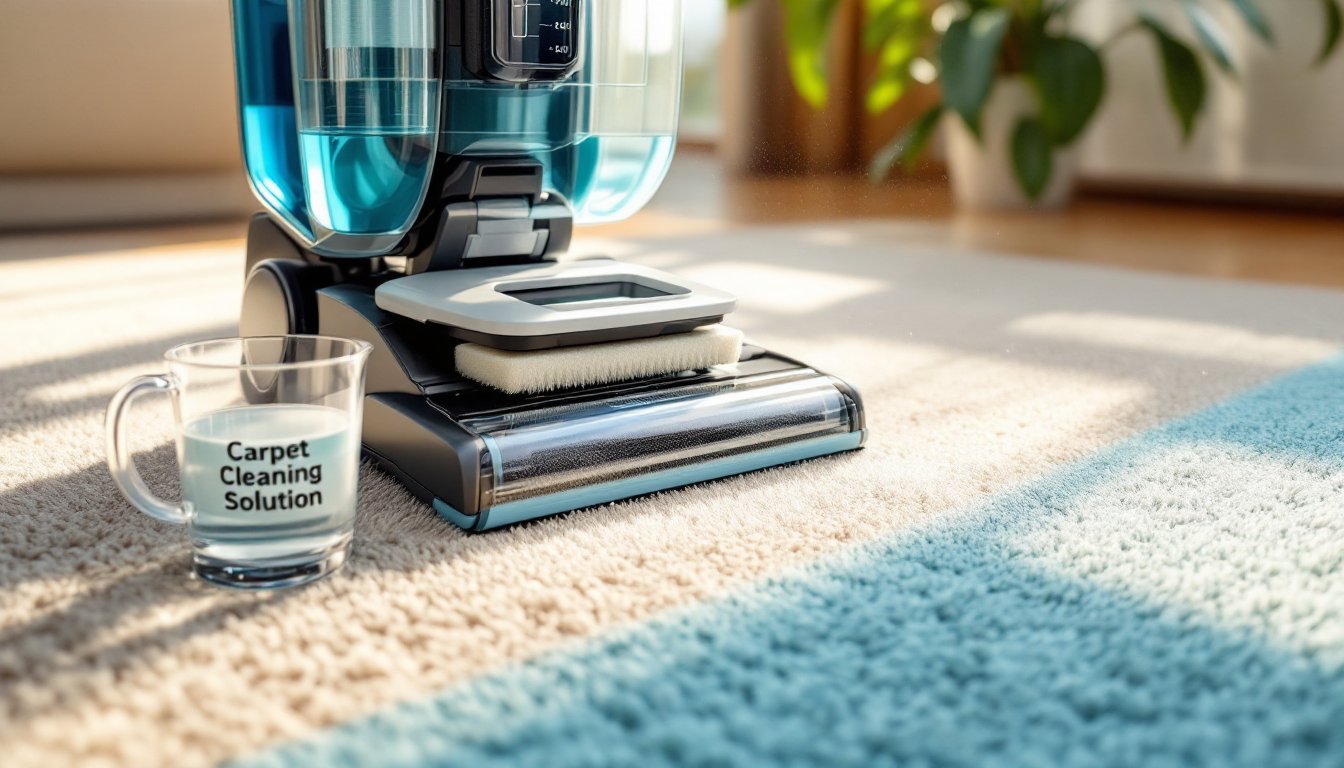
Walking into a rental shop or clicking “buy” on a carpet cleaner is the easy part. The real work, and the real results, come from what you pour into the tank. A machine only pushes water and solution through fibers: the cleaning chemistry is what lifts soil, neutralizes odors, and decides whether you’re left with clean carpet or a sticky, re-soiling mess.
Most homeowners grab whatever bottle the manufacturer bundled with the machine, or they guess at a DIY recipe without understanding pH, residue, or surfactants. That’s how you end up with rapid re-soiling or, worse, bleached spots on wool. This guide walks through solution types, carpet compatibility, proven homemade formulas, and the mistakes that turn a weekend refresh into a regrettable experiment.
Table of Contents
ToggleKey Takeaways
- The right cleaning solution for your carpet cleaner determines results more than the machine itself—chemistry lifts soil, neutralizes odors, and prevents sticky re-soiling.
- Residue from soap and detergent is the #1 cause of rapid re-soiling; always dilute concentrates correctly and finish with a plain water rinse to remove buildup.
- Different carpet types require different solutions: synthetic carpet tolerates most formulas, wool demands pH-neutral enzymatic cleaners and lukewarm water, and olefin benefits from degreasers for oil-based stains.
- DIY carpet cleaner solutions save money for spot cleaning or light maintenance, but homemade recipes risk pH imbalance and residue—test in hidden areas first, especially with vinegar or peroxide-based mixes.
- Avoid common mistakes like over-wetting, skipping pre-vacuuming, ignoring manufacturer pH guidelines, and mixing incompatible chemicals, which can cause permanent damage or void warranties.
- Professional hot-water extraction is recommended for whole-room deep cleaning when DIY attempts leave carpet dingy, as truck-mounted systems provide superior heat, pressure, and expertise for delicate fibers.
Why the Right Cleaning Solution Matters for Your Carpet Cleaner
Carpet cleaners are extraction machines, they inject solution under pressure, agitate fibers, then vacuum dirty water back out. The solution does the chemical lifting: surfactants loosen dirt, solvents break down oils, and pH adjusters neutralize stains. If the formula is too alkaline, it can damage natural fibers like wool or silk. If it leaves residue, the carpet attracts dirt faster than before you cleaned it.
Residue is the biggest culprit in rapid re-soiling. Soaps and detergents that don’t rinse fully leave a sticky film that acts like flypaper for dust and pet dander. Within a week, high-traffic areas look worse than they did before cleaning.
Another factor is concentration. Many commercial solutions are sold ready-to-use (RTU), while concentrates require dilution. Using concentrate at full strength won’t clean better, it’ll just leave more residue and waste product. Read the dilution ratio on the label and measure. Guessing costs you time and carpet lifespan.
Finally, odor control isn’t just about fragrance. Enzymes break down organic matter (urine, vomit, food spills) at the molecular level, eliminating smell rather than masking it. If you have pets or kids, enzymatic solutions are worth the extra few dollars per bottle.
Types of Carpet Cleaning Solutions: Which One Is Right for You?
Carpet cleaning solutions fall into several categories, each designed for specific soils and fiber types.
Synthetic detergent solutions are the most common. They use surfactants to lift dirt and are safe for most synthetic carpets (nylon, polyester, olefin). Brands like Bissell and Hoover bundle these with their machines. They’re effective for general soil and traffic lanes but can leave residue if over-applied.
Enzymatic cleaners contain live enzymes that digest protein-based stains, pet urine, blood, food. They work slowly, requiring 10–15 minutes of dwell time, and they’re pH-neutral, making them safe for wool and natural fibers. If you’re dealing with pet accidents, this is the category to prioritize.
Oxidizing cleaners use peroxide or similar agents to break stains through chemical reaction. They’re excellent for organic stains (wine, coffee, juice) but can bleach or discolor certain dyes. Test in an inconspicuous area first.
Low-moisture encapsulation solutions are newer to the consumer market. They crystallize soil into dry particles that vacuum away, leaving almost no moisture. These are best for commercial loop-pile carpet or situations where fast dry time is critical. They don’t deep-clean heavy soil.
Solvent-based solutions tackle oil and grease but are rare in home carpet cleaners due to flammability and ventilation requirements. You’ll mostly see these in commercial or automotive applications.
Commercial vs. Homemade Carpet Cleaning Solutions
Commercial solutions offer consistency, balanced pH, and targeted chemistry. You know what you’re getting, and reputable brands test for residue and colorfastness. The downside? Cost. A gallon of concentrate can run $20–$40, and RTU bottles are even pricier per ounce.
Homemade solutions save money and let you control ingredients. White vinegar, dish soap, and hydrogen peroxide are common bases. The risk is improper dilution or pH imbalance. Too much soap leaves residue: too much vinegar can set dyes or damage backing. Homemade works well for spot cleaning or light maintenance, but for whole-room extraction, many DIYers prefer commercial formulas to avoid trial-and-error on expensive carpet.
How to Choose a Cleaning Solution Based on Your Carpet Type
Not all carpet is created equal, and using the wrong solution can void warranties or cause permanent damage.
Nylon (the most common residential fiber) is durable and handles most solutions well. It’s resistant to alkaline cleaners, but avoid bleach or strong oxidizers on bright colors.
Polyester is stain-resistant but heat-sensitive. Use cool or lukewarm water and avoid high-pH solutions, which can dull the fiber’s luster.
Olefin (polypropylene) is moisture-resistant and colorfast, making it ideal for basements or outdoor rugs. It’s tough, but oil-based stains cling to it. Use a degreaser or solvent additive if you’re cleaning olefin with grease or automotive soil.
Wool and natural fibers require low-pH, enzyme-based, or specially formulated wool-safe solutions. High alkalinity causes browning (a chemical reaction with tannins in the fiber). Never use ammonia, bleach, or high-heat water on wool, stick to lukewarm and pH-neutral products. Many cleaning methods for delicate fabrics emphasize this temperature and pH caution.
Berber (looped construction, often wool or olefin) snags easily and can trap solution deep in loops. Use low-moisture or encapsulation products, and avoid over-wetting.
Check your carpet’s label or manufacturer documentation. Some warranties require specific cleaning methods or prohibit certain chemicals. When in doubt, test any solution in a closet corner and wait 24 hours to check for discoloration or texture change.
DIY Carpet Cleaning Solution Recipes You Can Make at Home
Homemade solutions work best for light soil, spot cleaning, or routine maintenance between professional deep cleans. Always test first and avoid over-wetting.
All-Purpose Light Cleaning Solution:
- 1 gallon hot water (not boiling)
- 2 tablespoons white vinegar
- 1 tablespoon dish soap (Dawn or similar: avoid moisturizing varieties)
Mix gently to avoid excess foam. This formula is mildly acidic, effective on synthetic carpet, and rinses fairly clean. Don’t use on wool, vinegar can affect dyes.
Pet Stain & Odor Solution:
- 1 cup 3% hydrogen peroxide
- 2 tablespoons baking soda
- 1 teaspoon dish soap
- 1 cup warm water
Combine in a spray bottle. The peroxide oxidizes organic matter, and baking soda neutralizes odors. Let it sit for 5–10 minutes before extraction. This works well on nylon and polyester but can bleach dark colors, test first.
Heavy-Duty Degreaser (for kitchen or garage carpet):
- 1 gallon hot water
- 1/4 cup white vinegar
- 2 tablespoons dish soap
- 1 tablespoon rubbing alcohol (70% isopropyl)
The alcohol cuts grease and speeds drying. Use on olefin or nylon only, avoid natural fibers.
Wool-Safe Gentle Solution:
- 1 gallon lukewarm water
- 1 tablespoon baby shampoo or wool wash (like Woolite)
- 1 teaspoon white vinegar (optional, for mild deodorizing)
Keep pH low and temperature cool. Over-agitation or heat can felt wool, so use gentle passes.
Pro tip: If you use dish soap, rinse with a second pass of plain water. Soap is the #1 cause of DIY residue issues.
Common Mistakes to Avoid When Using Carpet Cleaning Solutions
Using too much solution. More isn’t better. Excess liquid saturates backing, promotes mold, and extends dry time. Follow the machine’s fill line and the solution’s dilution ratio.
Skipping the pre-vacuum. Dry soil turns into mud when wet. Vacuum thoroughly, twice in high-traffic areas, before you run the cleaner.
Not testing colorfastness. Apply solution to a hidden area (under furniture, in a closet) and blot with a white cloth. If color transfers, don’t use that product. This is especially critical with DIY recipes or oxidizing cleaners.
Over-wetting the carpet. Extraction machines pull water back out, but if you move too slowly or make too many passes, you’ll saturate the padding. That leads to mildew, delamination, and odors. Make one slow wet pass, then one or two dry (suction-only) passes.
Ignoring pH. High-pH (alkaline) solutions can brown wool, set stains on synthetic carpet, and damage glue holding the backing. Most reputable cleaners are pH-balanced (around 7–10 for synthetics, 5–7 for wool). Homemade recipes often skew too acidic (vinegar) or too alkaline (baking soda in large amounts).
Mixing incompatible chemicals. Never combine bleach and ammonia (produces toxic gas), and don’t layer different commercial products without rinsing between. If you used an enzymatic cleaner, don’t follow with a high-pH detergent, it deactivates the enzymes.
Forgetting to rinse. If you used soap or a heavy-duty formula, run a final pass with plain water (or a vinegar rinse: 1 cup vinegar per gallon). This removes residue and prevents rapid re-soiling.
Tips for Maximizing Your Carpet Cleaner’s Performance
Pre-treat stains. Spray solution directly on spots and let it dwell for 5–10 minutes before running the machine. This gives chemistry time to break down soil.
Use hot water when safe. Most synthetic carpets tolerate water up to 150–160°F, which improves cleaning and extraction. Wool and delicate fibers require lukewarm water (90–100°F). Check manufacturer guidelines.
Overlap passes slightly. Move in straight lines, overlapping each stroke by a few inches to avoid streaks or missed areas. Some users follow strategies from organizing experts to map out room coverage efficiently.
Empty the dirty water tank frequently. A full tank reduces suction. Dump it after every room or two, rinse the tank, and check the filter for clogs.
Ventilate and speed drying. Open windows, run fans, or use a dehumidifier. Aim for carpet to dry within 6–12 hours. Slower drying risks mold and odor. Avoid walking on damp carpet, it re-soils instantly.
Clean the machine after every use. Rinse tanks, hoses, and brushes with hot water. Leftover solution turns rancid and clogs jets. Pull the brush roll and remove hair or debris.
Consider a pre-spray for heavily soiled areas. Commercial pre-sprays (or a DIY mix in a pump sprayer) applied 10 minutes before extraction can dramatically improve results on traffic lanes and stairs.
Wear safety gear. Gloves protect skin from hot water and cleaning agents. If you’re using peroxide or solvents, crack a window and consider a dust mask to avoid inhaling vapors.
If carpet remains dingy after a DIY attempt, it may be time for a professional hot-water extraction (often called steam cleaning, though it uses water, not steam). Pros use truck-mounted systems with higher heat, pressure, and suction than consumer portables. They also know how to handle delicate fibers and set-in stains without damage.


