
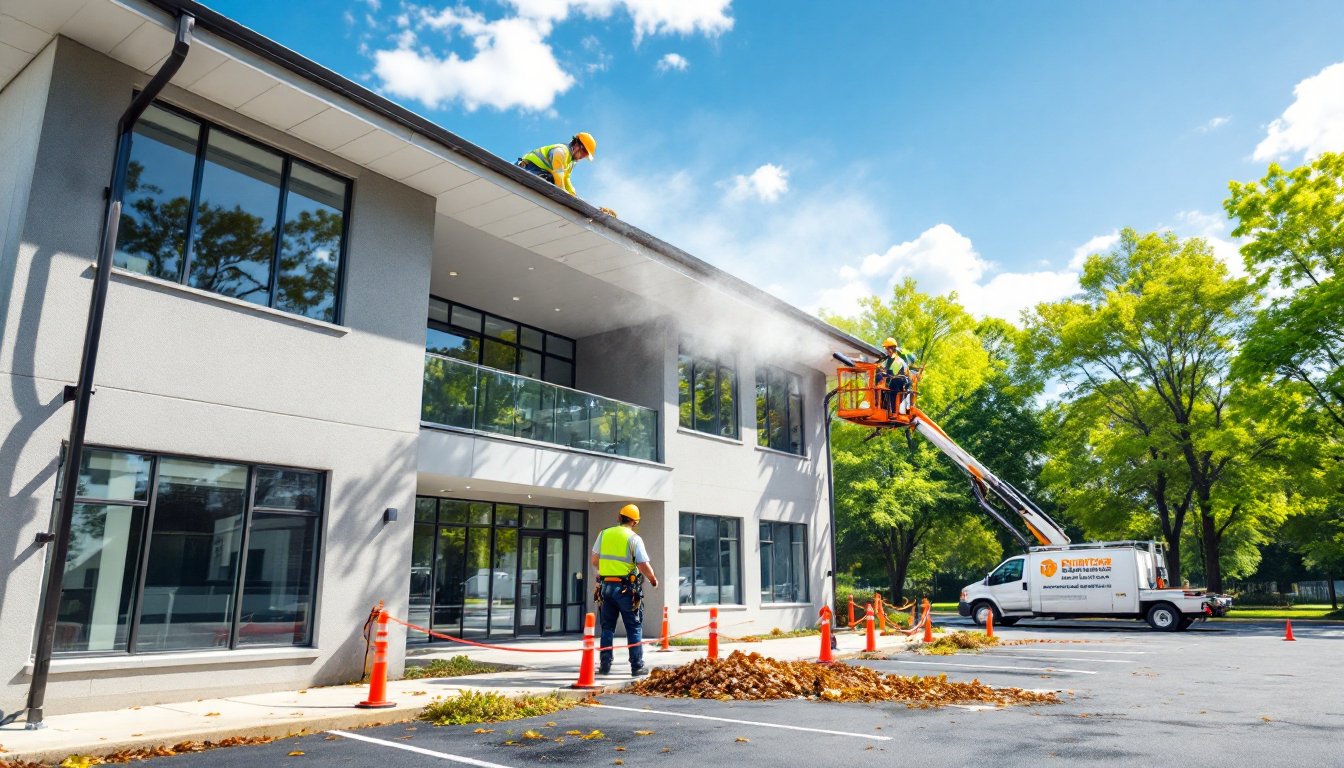
Commercial gutters handle exponentially more drainage than residential systems, and when they fail, the consequences go beyond curb appeal. Clogged gutters on a multi-story office building or retail center can lead to foundation erosion, structural water damage, and liability issues that cost tens of thousands to remediate. Unlike a homeowner with a ladder and a Saturday afternoon, commercial property managers need specialized equipment, trained crews, and maintenance schedules that align with local weather patterns. Professional gutter cleaning isn’t a convenience, it’s infrastructure maintenance that protects property value and tenant safety.
Table of Contents
ToggleKey Takeaways
- Commercial gutter cleaning services are essential infrastructure maintenance that prevent costly foundation damage, water intrusion, and liability issues that can reach tens of thousands in remediation costs.
- Professional gutter cleaning requires specialized lift equipment, trained crews, and proper OSHA compliance to safely maintain gutters on multi-story buildings and avoid worker safety violations.
- Most commercial properties should schedule gutter maintenance twice annually (spring and fall), with quarterly or monthly service recommended for buildings near trees, in storm water management districts, or with significant debris accumulation.
- When choosing a commercial gutter cleaning company, verify general liability insurance ($1–$2 million minimum), workers’ compensation coverage, OSHA certifications, and request references from similar property types to ensure safety and expertise.
- Commercial gutter cleaning costs typically range from $0.75–$3.00 per linear foot depending on building height and access difficulty, with annual maintenance contracts offering 15–25% discounts compared to one-time service pricing.
- Professional gutter services protect commercial property value by inspecting for pitch issues, fascia damage, and ensuring secondary drainage paths meet code requirements, preventing water damage to expensive roofing membranes.
What Are Commercial Gutter Cleaning Services?
Commercial gutter cleaning services provide scheduled maintenance and debris removal for large-scale buildings, warehouses, shopping centers, apartment complexes, office parks, and industrial facilities. Unlike residential work, these jobs require:
- Lift equipment or scaffolding access for buildings over two stories, since extension ladders can’t safely reach heights beyond 30 feet.
- Crew-based operations with multiple technicians working simultaneously to minimize disruption during business hours.
- Downspout flushing and inspection to verify drainage flow rates meet design specifications.
- Documentation and reporting for property management records, insurance compliance, and capital planning.
Most commercial services include gutter cleaning, downspout clearing, minor repairs (resealing seams, reattaching loose sections), and photo documentation of before/after conditions. Some companies offer camera inspection of underground drainage lines if the system ties into storm sewers.
The service isn’t just hauling leaves out of troughs. Technicians check for pitch issues (gutters should slope 1/4 inch per 10 feet toward downspouts), fascia damage from water infiltration, and loose fasteners that could cause detachment during wind events. On flat-roof buildings with internal drains, they’ll inspect scuppers and overflow drains to ensure secondary drainage paths aren’t blocked, an IRC code requirement in many jurisdictions.
Why Commercial Properties Need Professional Gutter Maintenance
DIY gutter cleaning works for a ranch house. For a 40,000-square-foot commercial building, it’s a liability nightmare.
Safety Compliance: OSHA fall protection standards (1926.501) require guardrails, safety nets, or personal fall arrest systems for work above six feet. A property manager sending maintenance staff onto a roof with a ladder violates federal regulations and opens the door to workers’ comp claims. Professional gutter companies carry the required insurance and certified safety equipment.
Structural Protection: Commercial roofs often use TPO, EPDM, or modified bitumen membranes that cost $4–$8 per square foot to replace. Overflowing gutters dump water directly onto these surfaces, accelerating UV degradation and seam failure. Foundation repair on a slab-on-grade commercial building can run $15,000–$50,000 if soil erosion creates voids under the slab.
Tenant Relations and Code Violations: Water pooling near entrances from failed gutters creates slip hazards and ADA accessibility issues. Municipal building inspectors can issue citations for visible water damage or missing downspout extensions, particularly in storm water management districts.
Preventing Ice Dams: In cold climates, clogged gutters trap melting snow, which refreezes into dams that force water under roofing materials. The ice also adds significant weight, saturated debris can add 4–8 pounds per linear foot to gutter systems designed for static loads, causing bracket failure.
Professional services use commercial-grade equipment and scheduling that aligns with peak debris seasons, preventing the cascading failures that turn a $300 cleaning into a $30,000 remediation project.
What to Expect from a Commercial Gutter Cleaning Service
A professional commercial gutter service follows a documented process:
Initial Assessment
The company conducts a site walk to identify:
- Access points (roof hatches, suitable areas for lift placement)
- Gutter system type (K-style, half-round, box gutters, or built-in systems)
- Surrounding hazards (power lines, landscaping, parking lot traffic control)
- Linear footage and number of downspouts
They’ll propose a maintenance frequency based on tree coverage, building height, and local climate.
Day-of-Service Protocol
- Crew arrival and setup: Technicians establish safety perimeters, deploy lifts or scaffolding, and notify building occupants.
- Debris removal: Using trowels, blowers, or vacuum systems, they clear leaves, shingle grit, bird nests, and sediment. Material is bagged and removed, not dumped over the edge.
- Downspout flushing: High-pressure water or augers clear blockages. If a downspout is solidly packed, they may disconnect elbows to clear it.
- Component inspection: Checking for rust-through, detached hangers, and end cap failures.
- Minor repairs: Resealing seams with gutter sealant, tightening brackets, or adjusting pitch.
- Documentation: Photos and notes on system condition, repairs made, and recommendations for capital replacements.
Post-Service Reporting
You’ll receive a service report detailing work completed, issues identified, and estimated costs for deferred repairs. This documentation is essential for property management companies with professional cleaning protocols across multiple sites.
Some companies offer optional add-ons like gutter guard installation (reduces cleaning frequency but doesn’t eliminate it) or thermal imaging to detect hidden water intrusion behind fascia boards.
How Often Should Commercial Gutters Be Cleaned?
Frequency depends on environment and building characteristics:
Twice Annually (Spring and Fall): The baseline for most commercial properties. Spring cleaning removes winter debris and inspects for ice damage. Fall service clears leaves before winter precipitation.
Quarterly: Required for buildings near deciduous trees, properties with flat roofs and internal drains, or facilities in high-pollen areas where organic buildup accelerates.
Monthly During Peak Seasons: Warehouses near pine forests or buildings with aging roof systems that shed excessive granules may need monthly checks in fall.
After Major Weather Events: Post-storm inspections are critical after hurricanes, ice storms, or windstorms that deposit branch debris.
Properties in storm water management districts may have mandated maintenance schedules tied to their site development permits. Failure to maintain gutters and drainage systems can result in municipal fines and increased storm water utility fees.
For mixed-use buildings with scheduled cleaning services, gutter maintenance is often bundled into quarterly exterior maintenance contracts that include pressure washing and parking lot sweeping.
Choosing the Right Commercial Gutter Cleaning Company
Vet commercial gutter companies as rigorously as you would any contractor working at height:
Verify Insurance and Licensing
- General liability insurance ($1–$2 million minimum)
- Workers’ compensation coverage (verify current certificates, not just proof of application)
- Commercial vehicle insurance if they’re parking lifts on-site
- Applicable business licenses (requirements vary by municipality)
Ask for certificates of insurance naming your property as an additional insured.
Check Safety Training and Equipment
Ask what fall protection systems they use and whether technicians hold OSHA 10 or 30-hour certifications. Companies using articulating boom lifts should have operators with aerial lift certification.
Review Maintenance Plans and Response Times
Flexible scheduling matters. Can they accommodate after-hours work to avoid disrupting business operations? Do they offer emergency call-outs for sudden blockages causing flooding?
Request References and Portfolio
Ask for references from similar property types. A company experienced with single-story retail may lack the equipment for a six-story office building. Platforms like HomeAdvisor provide reviews and project portfolios.
Understand What’s Included
Clarify whether the quote includes disposal fees, minor repairs, and reporting. Some companies charge extra for downspout disconnection or gutter guard removal and reinstallation.
Ask About Drainage System Expertise
A quality company understands how gutter systems integrate with foundation drainage, storm water management, and roof warranty requirements. They should be able to identify when drainage issues extend beyond gutters and require coordination with plumbing professionals.
Cost Factors for Commercial Gutter Cleaning Services
Commercial gutter cleaning pricing is more complex than residential flat rates:
Linear Footage: Base pricing often starts around $0.75–$2.00 per linear foot for single-story buildings, increasing with height. A 300-linear-foot system on a two-story building might run $450–$900 per cleaning.
Building Height: Each story adds equipment and labor costs. Third-story work may require $1.50–$3.00 per linear foot due to lift rental and additional safety protocols.
Access Difficulty: Buildings with no roof access, obstructed parking areas, or proximity to power lines require specialized equipment and increase costs by 25–50%.
System Condition: Heavily clogged gutters packed with sediment take longer to clean than seasonal leaf removal. First-time cleanings on neglected systems can cost double the maintenance rate.
Geographic Location: Urban areas with higher labor costs and regions with premium insurance requirements see higher pricing. Costs in major metro areas can run 30–40% above rural rates.
Contract vs. One-Time Service: Annual or multi-year maintenance contracts typically offer 15–25% discounts compared to per-visit pricing. They also lock in rates and guarantee service priority.
As a rough benchmark, a 5,000-square-foot commercial building with 400 linear feet of gutters might pay $800–$1,500 per cleaning for twice-annual service, or $1,600–$3,000 annually. Properties requiring quarterly service should budget $3,000–$6,000 per year.
These estimates assume standard access and moderate debris levels. For detailed cost breakdowns and contractor comparisons, platforms like ImproveNet provide regional pricing data and project calculators.
Don’t shop solely on price. A company charging $400 for a job quoted at $800 elsewhere is either underinsured, skipping safety protocols, or planning to upsell on-site. Mid-range quotes from properly insured, safety-compliant companies offer the best long-term value.
Conclusion
Commercial gutter maintenance isn’t optional, it’s structural protection with a paper trail. The cost of professional service is a fraction of what you’ll spend repairing foundation damage, remediating water intrusion, or defending a slip-and-fall lawsuit from a flooded entrance. Schedule cleanings before problems start, verify insurance and safety compliance, and treat gutter maintenance as the infrastructure investment it is. Your building’s longevity depends on moving water away from it efficiently, and that starts at the roofline.


